
What Happens During an Oral Cancer Screening?
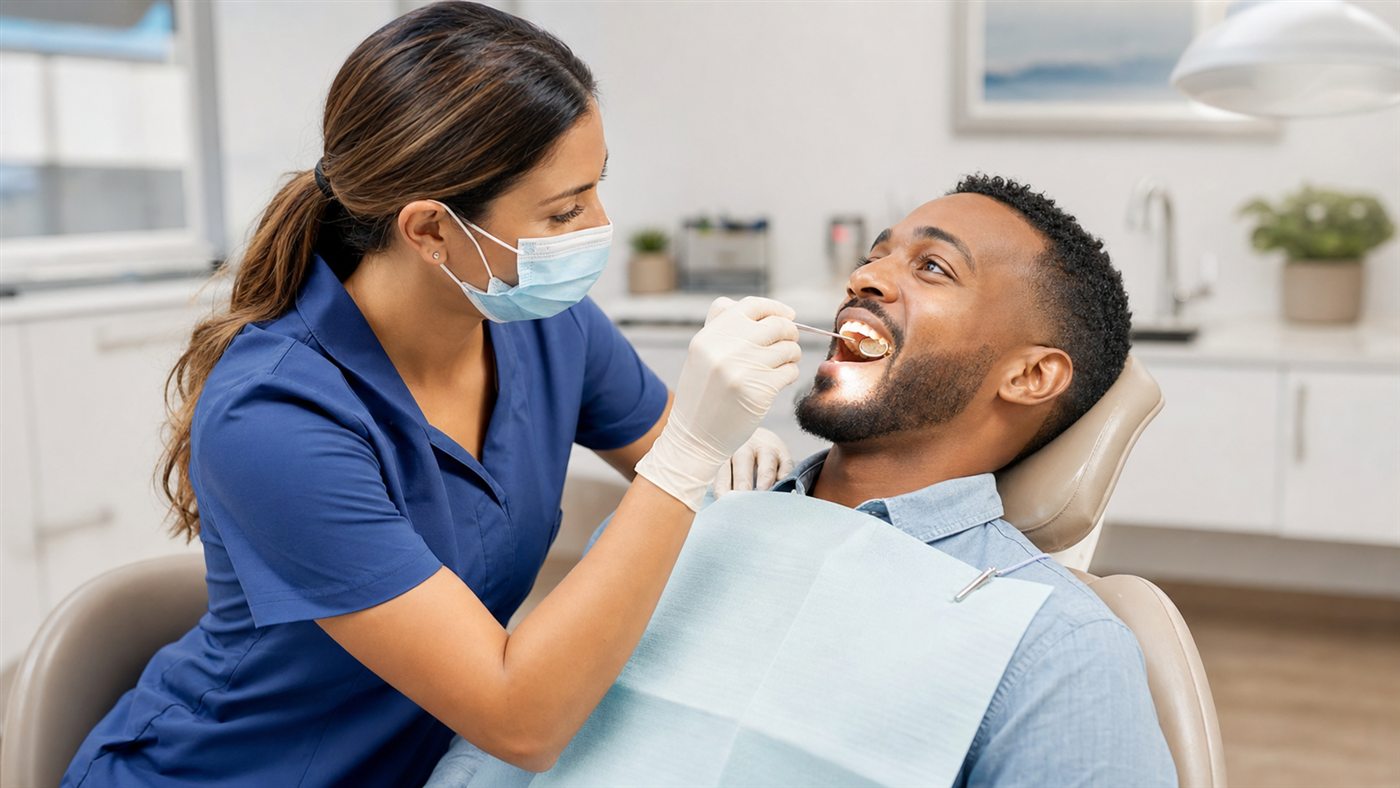
An oral cancer screening is a quick, comfortable part of preventive dental care. It gives your dentist an opportunity to look and feel for changes in the mouth, throat, jaw, and neck that may deserve a closer look. Most unusual areas are not cancer, but identifying a change early can make follow-up simpler and more timely.
At Oak Hill Family Dentistry, oral cancer screenings are approached as one part of a complete dental evaluation—not as a stand-alone diagnosis. Here is what Newnan patients can expect and what to tell the dental team before the exam.
What happens during an oral cancer screening?
The screening is usually completed during a routine checkup. Your dentist may ask about changes you have noticed, your health history, tobacco or alcohol use, sun exposure, and other factors that can affect risk. Honest answers help the exam stay focused; they are not a reason for judgment.
During the visual exam, the dentist may inspect the lips, gums, cheeks, roof and floor of the mouth, tongue, and the back of the throat. A small dental mirror and exam light help make these areas easier to see. You may be asked to move your tongue so its sides and underside can be checked.
The dentist may also gently feel the jaw, neck, and areas inside the mouth for swelling, tenderness, or a change in texture. This visual and tactile exam generally takes only a few minutes and does not require needles or anesthesia.
What is the dentist looking for?
The goal is to notice tissue that looks or feels different from the surrounding area. Examples can include a sore that has not healed, a red or white patch, a lump, unexplained bleeding, persistent hoarseness, or ongoing difficulty chewing or swallowing. These signs can have many non-cancerous causes, so finding one does not mean you have cancer.
A screening also cannot confirm or rule out cancer by itself. If an area looks unusual, the appropriate next step may be to document it, recheck it after a short interval, or refer you to another clinician for further evaluation or a biopsy. Your dentist should explain what was observed and why any follow-up is recommended.
Who should be screened?
Adults can benefit from having the soft tissues of the mouth examined as part of regular dental care. Some people have higher risk, including those who use tobacco, drink alcohol heavily, have substantial sun exposure to the lips, or have certain types of human papillomavirus (HPV). Risk generally increases with age, but oral cancer can occur in people without obvious risk factors.
That is one reason not to wait for pain. Early tissue changes may be painless, and a person may not be able to see the sides or underside of the tongue clearly at home. Regular dental exams and cleanings create a consistent opportunity to discuss changes and compare what the dental team sees over time.
When should you call before your next checkup?
Contact a dentist or medical clinician if you notice a mouth sore, patch, lump, hoarseness, numbness, or swallowing problem that persists for about two weeks, or sooner if it is worsening. Seek urgent medical help for trouble breathing, rapidly increasing swelling, or uncontrolled bleeding.
Before your visit, note when the change began and whether it has grown, changed color, or become painful. Bring an up-to-date medication list and share any relevant health history. If you are new to the practice, Oak Hill’s New Patients guide explains forms, insurance verification, financing options, and what to bring.
A small step in preventive care
An oral cancer screening is brief, noninvasive, and useful because it examines areas that are easy to overlook at home. It is not a diagnosis and cannot replace follow-up when a concerning change is found, but it can help start the right conversation at the right time.
Have a question about a change in your mouth?
Schedule a dental evaluation with Oak Hill Family Dentistry in Newnan. We will listen to your concerns, examine the area, and explain any appropriate next steps.
Sources and Further Reading
Clinical content is reviewed by Dr. Mike Jin, DMD. See our Medical Content Policy and Editorial Policy.