
How CBCT-Guided Dental Implant Placement Works
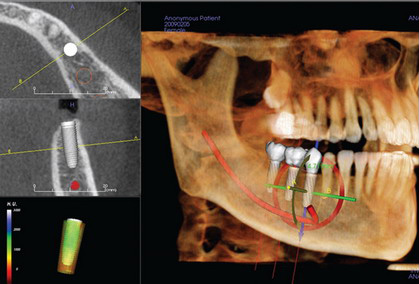
For many patients, the idea of placing a dental implant sounds like a long, complicated procedure. Modern planning can make a straightforward case feel much more organized. At Oak Hill Family Dentistry, 3D cone beam CT imaging can be used when appropriate to study the jaw in three dimensions, and a custom surgical guide can help transfer that plan to the placement visit.
In a properly selected, uncomplicated case, this approach can make implant placement simple and streamlined. The implant-placement portion of the appointment can often take less chair time than a filling. That comparison applies only to the placement step—not the full implant process—and every patient’s anatomy, treatment needs, healing, and timing are different.
What does CBCT planning show?
A standard dental X-ray is useful, but it is a two-dimensional picture. A cone beam CT scan, often shortened to CBCT, creates a three-dimensional view of the teeth, jawbone, nearby tooth roots, sinus spaces, and important nerves. For implant planning, that added perspective helps the dentist evaluate available bone and choose a proposed implant position, angle, and size before treatment begins.
The scan is only one part of the evaluation. Your dentist also considers your gums, bite, medical history, the condition of neighboring teeth, and the type of restoration the implant will eventually support. Some patients may need additional treatment, such as bone grafting, while others may not be candidates for implant treatment. Planning is individualized rather than based on one standard template.
What is a dental implant surgical guide?
A surgical guide is a custom-made device designed from the digital plan. It fits over the teeth or gums and contains a precisely positioned opening that helps guide the implant instruments toward the planned location and angle. You can think of it as a physical connection between the virtual plan and the treatment appointment.
The guide does not replace clinical judgment, and it does not guarantee a particular result. The dentist still verifies the fit, evaluates the surgical site, and may adjust the plan when the clinical findings call for it. When the case is suitable, however, guide-assisted placement can reduce guesswork and support a focused, efficient visit.
How can guided implant placement benefit patients?
- Planning before the appointment: Important anatomical details and restoration goals can be considered before the placement visit.
- A restoration-first approach: The implant can be planned with the future crown, bridge, or denture position in mind.
- A more streamlined placement step: In straightforward, properly selected cases, the prepared guide can help the clinical team carry out the plan efficiently.
- Clearer patient communication: Three-dimensional images can make it easier to explain the proposed position, nearby anatomy, alternatives, and limitations.
These advantages do not mean guided placement is necessary for every implant or that every case will be quick. Mouth opening, bone volume, infection, the number of implants, grafting needs, and the location of nerves or sinuses can all change the approach.
Placement is only one stage of implant treatment
It is important to separate the placement visit from the complete treatment timeline. During placement, the implant fixture is positioned in the jaw. Afterward, the bone generally needs time to heal and integrate around it. Depending on the case, a temporary tooth may or may not be used during this period.
Once healing is adequate, additional steps are needed to create and deliver the final restoration—the visible crown, bridge, or implant-supported denture. The complete timeline can range over several months and may be longer when extractions, grafting, healing needs, or complex restorative work are involved. A short placement appointment does not mean an instant final tooth.
Who may be a good candidate?
The best way to find out is through an examination and appropriate imaging. A patient may need healthy enough gums, adequate bone or a workable grafting plan, and medical factors that support healing. Smoking, uncontrolled health conditions, active infection, and certain medications can affect risks or timing. Your dentist will also discuss non-implant choices when relevant.
For an overview of the full process and replacement options, visit our dental implants service page. The goal of planning is not to make every patient fit the same treatment. It is to understand the anatomy, choose an appropriate option, and make each stage as predictable and well organized as possible.
Request an appointment to discuss whether a dental implant evaluation and 3D planning may be appropriate for you.
Sources and Further Reading
Clinical content is reviewed by Dr. Mike Jin, DMD. See our Medical Content Policy and Editorial Policy.